

Read time: 6 minutes
The Truth and Reconciliation Commission of Canada: Calls to Action report includes a number of calls to action related to both health care and education. The Truth and Reconciliation Commission specifically calls upon educational institutions to ensure healthcare students learn about Indigenous health issues with skills-based training in intercultural competency, conflict resolution, human rights, and anti-racism.
What does it look like when these calls to action are implemented in the classroom for pharmacists and pharmacy technicians? Both the University of Alberta and NorQuest College have taken significant strides in anti-racism practices for pharmacist and pharmacy technician students, respectively.
The University of Alberta Indigenous Strategic Plan was developed to support reconciliation in post-secondary education, research, and addressing the historical legacy of the residential school system and Canada’s colonial history in a meaningful and lasting way. This plan was used to inform the development of the Faculty of Pharmacy and Pharmaceutical Sciences 2024-29 strategic plan.
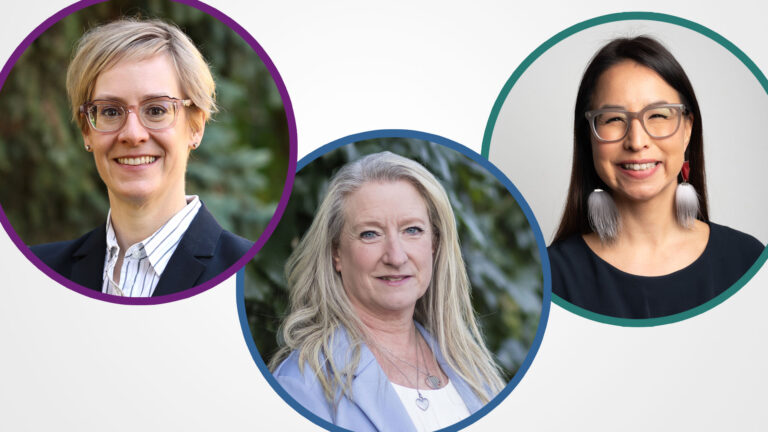
Jill Hall, Clinical Professor and Director of the PharmD Program at the University of Alberta, said that the principles of the Indigenous Strategic Plan inform how pharmacist students are taught.

“We weave in the principles of equity, inclusivity, diversity, and accessibility throughout the program. There’s direct instruction, and then there’s the overall approach,” said Jill. “It’s not limited to one course or session—the foundation is laid and then it’s built upon.”
NorQuest College established an Office of Equity as part of their strategic commitment to become an inclusive, anti-racist, and decolonized organization. Their Anti-Racism Curriculum and Pedagogy Toolkit presents their vision, approach, tools, and resources to implement anti-racist pedagogy.
Kara Mohr, Chair of the Pharmacy Technician Diploma Program at NorQuest College, explained that the tools and resources they developed are part of a broader cultural shift towards anti-racism.

“The Office of Equity and the Anti-Racism Toolkit are part of a bigger initiative to shift our culture from ‘I’m not a racist’ to ‘I’m anti-racist,’” said Kara. “They help faculty reflect on their teaching practices; provide tools to remove systemic barriers; and ensure students feel valued, respected, and heard.”
From the students’ perspective, Jill and Kara agree that creating inclusive spaces is essential to foster success.
“Creating inclusive spaces is so important because it ensures that every student, no matter their background, has a chance to succeed,” said Kara. “We find that when our students feel welcomed and valued, they’re much more likely to engage, to thrive, and to build meaningful connections.”
Jill added that this approach helps students develop essential skills.
“We want students to be thinking about not only working together in our classrooms, but moving forward into creating inclusive and welcoming spaces in whatever pharmacy environment they’re working in,” she said.
Amber Ruben, instructor with the Faculty of Pharmacy and Pharmaceutical Sciences, added that for First Nations, Métis, and Inuit students, taking a more inclusive approach makes educational spaces more welcoming.
“Health care has traditionally been very western focused and oftentimes it doesn’t fit well for a lot of different folks, including Indigenous Peoples. Without the integration of other world views, the space can feel negative for students from different cultures,” said Amber. “It’s really important that healthcare domains recognize, understand, and integrate these other ideas of health and wellness.”
For both NorQuest College and the University of Alberta, it has been a priority to meaningfully address the Truth and Reconciliation Commission’s Calls to Action and integrate Indigenous perspectives into their programs.
Jill mentioned a few strategies they have implemented at the University of Alberta, including reserving seats for Indigenous learners, working with the College of Health Sciences Indigenous strategic initiatives officer, and admission requirements related to education through the University of Alberta’s Indigenous Canada course.
Amber said that, as an instructor, she advocates to meaningfully integrate an Indigenous lens in the classroom.
“I promote the incorporation of an Indigenous lens not only in lectures, but also in a practical sense. For example, in labs, it is essential to ensure there are Indigenous patients who don’t fit negative stereotypes. We might also integrate the use of traditional medicines or participation in cultural ceremonies,” said Amber. “We know there are inequities in health for Indigenous patients and populations and being able to understand and address those inequities won’t be accomplished with a single course—it has to be a part of a pharmacy professional’s approach to their overall practice.”
At NorQuest College, Kara said part of their approach to fostering inclusivity is by creating safe physical spaces. The miyo-pimâtisiwin Centre at NorQuest College is a welcoming space where Indigenous students, staff, and community outreach partners can gather to share meals, tell stories, and participate in ceremonies. The name of the space means “to live a good life” in Cree.
Kara said they are currently working with the Indigenous Pharmacy Professionals of Canada to develop new modules and they are in the process of revamping their patient cases to apply an equity lens to ensure they reflect that diversity that the students will encounter in their careers.
“We’re mindful to ensure that we incorporate equity, diversity, inclusion, and accessibility content naturally into our curriculum. We don’t want it to feel like it’s been tacked on,” said Kara. “We’ve taken many different steps to integrate Indigenous perspectives into our classrooms—with every step, big and small, we try to find new opportunities to demonstrate our commitment to anti-racism and strive towards reconciliation.”
At the end of the day, Kara, Amber, and Jill all agree that it will be the patients who benefit from every step towards inclusivity.
“Patients stand to gain so much from these efforts,” said Kara. “By the time our students graduate, we don’t just want them to be skilled pharmacy technicians—we want them to be culturally sensitive, compassionate, inclusive, and professional. We take pride in our graduates and we want to provide them with the knowledge and skills they need to meet the diverse needs of patients.”
Amber explained that an inclusive approach is essential to meet each patient’s unique needs.
“The pharmacy professions have evolved to focus on person-centred care,” said Amber. “If you’re going to practise with that person at the centre, you have to integrate the principles of diversity, equity, inclusion, and accessibility.”
Jill added that pharmacy professionals must truly appreciate that patients have different histories, needs, and priorities in order to effectively deliver care.
“Person-centeredness is more than cultural sensitivity,” said Jill. “We need to see a real acceptance and internalization that there are different world views and different ways that people work to be healthy.”
To do better, we have to know better. When pharmacy professionals build a foundation of understanding, empathy, and equity throughout their education, they bring those skills into their careers and are prepared to deliver person-centred care and truly meet the needs of every patient.