
Read time: 6 minutes
The Indigenous Pharmacy Professionals of Canada (IPPC) is a non-profit membership-based association that represents pharmacists, pharmacy technicians, and unregulated employees with proof of Indigenous ancestry. They serve to cultivate a thriving and empowered community of Indigenous pharmacy professionals to support safe and equitable care of patients, families, and communities.

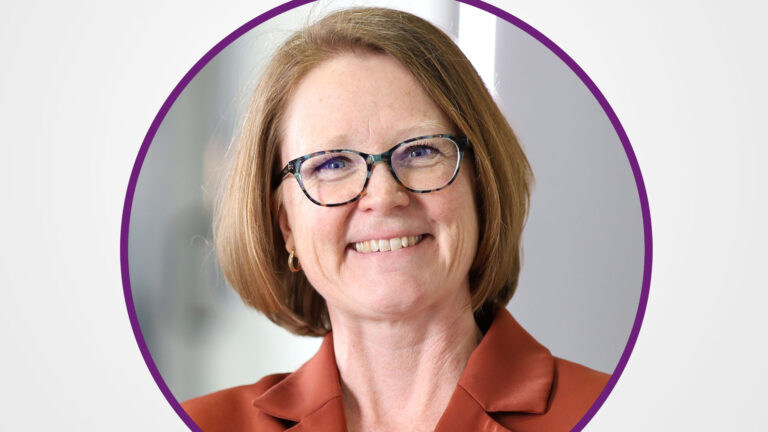
The IPPC’s executive director, Amy Lamb, discussed the essential role of Indigenous pharmacy professionals and explored how pharmacy teams can collaboratively create safe and holistic healthcare spaces.
How does the IPPC work to empower Indigenous pharmacy professionals?
“IPPC was founded to provide support, mentorship, and empowerment for Indigenous pharmacy professionals. Indigenous pharmacy professionals often practise in isolation and are subject or witness to interpersonal and structural racism. Our first priority is creating a safe space where Indigenous pharmacy professionals can find a community and an advocacy body to share their experiences, strengths, and challenges and find healing.
Indigenous pharmacy professionals must be rooted in Indigenous wisdom and teachings, as they are commonly called upon to contribute to the evolution of Indigenous-led and determined pharmacy and health systems. Our members experience varying degrees of separation from their cultures due to the impacts of colonization. We offer a range of programs and resources to help Indigenous pharmacy professionals lead the changes they wish to see in pharmacy practice.”
Why is it important to encourage Indigenous People to become pharmacy professionals?
“The Truth and Reconciliation Commission of Canada’s Call to Action #23 calls for more Indigenous health professionals. Our members have experienced first hand the importance of this representation. Many of our members have had to challenge long-standing biases, structural racism, and care models that have harmed Indigenous patients within Canadian health systems. Whether it is simply the awareness of Indigenous values, communities, history, or priorities, Indigenous health professionals view pharmacy practice through the lens of their experiences.
Ultimately, the health workforce and its leadership structure should at least work towards reflecting the populations served. Indigenous patients are inequitably represented in health care, and in healthcare harms. Their participation in health system transformation will address, resolve, and prevent the perpetuation of these inequities. It isn’t just enough to have Indigenous health professionals; they must be included in all levels of leadership and governance. Only then can we truly address the systemic factors that lead to health disparity.”
When Indigenous pharmacy professionals are involved as part of a patient’s healthcare team, how does that representation support safe and equitable care of patients, families, and communities?
“It comes down to ownership over the issues facing Indigenous patients, and the drive that comes from knowing that your own people are being harmed by structural and systemic racism that is administered by your profession. Many members are known to their communities, creating a feeling of familiarity and trust. Our members can share their stories, reciprocating the experiences of patients who are sharing their health stories. The importance of culture and cultural healing practices can be provided from first-hand experience and collaboration with local Nations or knowledge keepers.”
How can pharmacy teams better support and serve Indigenous patients?
“Truth first, then reconciliation. Pharmacy teams must be aware of the histories and harms and have the humility to accept the value of cultural practices or experiences which they may not understand.
Pharmacy teams also need to recognize themselves as vital contributors to resolving access inequities for Indigenous patients, whether that involves addressing coverage challenges, geographical barriers, or navigating other systems.
Pharmacies are the most accessible healthcare spaces and offer potentially transformational resources for patients with complex health circumstances. Sometimes this means working a little harder to solve a problem, form a trusting relationship, or learn and unlearn to be a better contributor.”
How can pharmacy teams incorporate equity, diversity, inclusion, and accessibility into their pharmacy practices?
“We cannot make assumptions about patients, their race, or their culture, even if it is known to us. When you root your practice in seeing the person for who they are, for their story and their circumstances, you support Indigenous patients. When you go the extra mile to navigate a difficult conversation or access barrier, you support Indigenous patients.
Having visuals such as infographics, Indigenous art from the region, an ‘IPPC Every Child Matters’ shirt, or a Red Dress Pin, can passively build a conversation and culturally safe relationship.
Many Indigenous patients maintain their ancestral language as their first language, so working towards good communication strategies, involving family or community members in care, and providing pictograms or other infographic tools for translation will ensure that all patients can benefit from the education and instructions that you are providing.
Lastly, connect with the local Nations and communities and form relationships with healing spaces or practitioners that you could refer to. Offer your services for their health fairs or major events and ensure that you provide information about the scope of care and access to health that pharmacies can provide. Develop plans for medication access with those patients and communities that you work with that are in rural or remote locations with a higher risk of emergencies or evacuations. For example, I recently set up a table at a wildfire evacuation site and offered my help in administrative prescribing, coordination of medication access, and providing information about what pharmacists can do.
Ultimately, what we do to create culturally safe spaces for Indigenous patients will make pharmacy spaces safer for all patients.”
Are there learning tools or resources you would recommend?
“IPPC offers a growing list of resources and tools, which can be found on our website. I encourage pharmacy professionals to review the following resources:
- EDI and Indigenous health and cultural safety training – complete program;
- Equity-Diversity-Inclusion, Indigenous and 2SLGBTQQIA+ Health & Cultural Safety Training for Pharmacy Professionals two-course series;
- Weaving Indigenous perspectives into pharmacy practice to strengthen environmental leadership, stewardship and sustainability playbook;
- Navigating the Non-Insured Health Benefits (NIHB) program video series;
- National Collaborating Centre for Indigenous Health publications and webinars; and
- IPPC Facebook, Instagram, and LinkedIn channels.”