Read time: 3 minutes
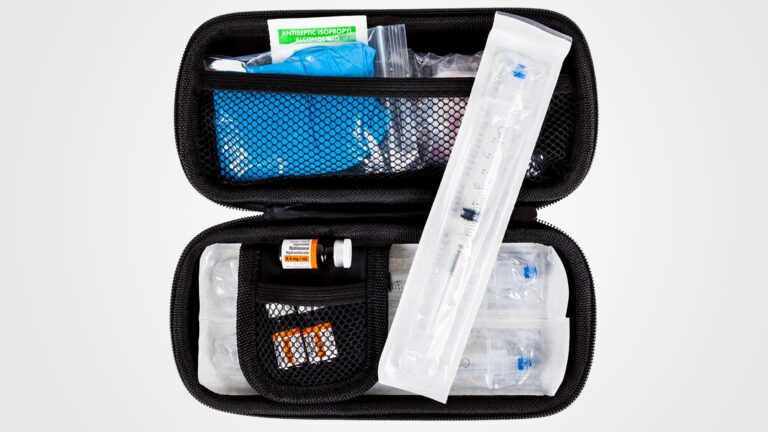
Significant changes are being implemented to the provincial government’s Community Based Naloxone (CBN) program.
Effective October 1, 2026, the CBN program requires pharmacists or pharmacy technicians to record a patient-specific personal health number (PHN) when submitting a claim for a naloxone kit under the CBN program. As of this date, a PHN must be requested when providing a CBN kit. It must be collected and recorded for every kit provided.
If an individual is unable or unwilling to provide a valid PHN or doesn’t have an active PHN, the pharmacy team must refer the individual to a nearby community-based organization (CBO) for access to a kit. In very limited circumstances, a pharmacy team may use a pseudo-PHN to provide a naloxone kit without referring a patient to a CBO including when:
- there is an immediate or emergency need to administer naloxone, or
- an individual cannot access a PHN and there are no nearby CBOs offering kits.
Under the new rules of the program, non-regulated pharmacy staff, including pharmacy assistants, are not permitted to independently train patients or provide naloxone kits without the oversight of a responsible regulated member.
Please note there is no change to pharmacy participation because of the transition from Primary Care Alberta to Recovery Alberta and there is no need to re-register with the CBN program. Community pharmacies will continue to order, receive, and distribute free naloxone kits and Albertans will continue to access naloxone kits free of charge through participating pharmacies. Primary Care Alberta and Recovery Alberta are working together to ensure a seamless transition of services, with no interruption to naloxone kit procurement, distribution, or public access.
As a reminder, CBN kits may be provided from pharmacies by a pharmacist or pharmacy technician who has completed the appropriate education required to participate in the program.
Naloxone kits may be provided to those at risk of experiencing an opioid poisoning or are likely to witness and need to respond to an opioid poisoning (outside a hospital setting). Pharmacists and pharmacy technicians providing naloxone kits are responsible for ensuring individuals are offered education on opioid poisoning response and naloxone use.
For more information about the changes to the provincial government’s CBN program, please refer to Alberta Blue Cross Benefact #1336. Please note that ACP’s guidance document—Providing naloxone for personal use as an unscheduled drug – Guidelines for pharmacy teams—has been retired.
Questions about the policy change should be directed to Mental Health and Addiction at MentalHealthandAddiction@gov.ab.ca.
Questions about program operations can continue to be directed to naloxone.kit@recoveryalberta.ca.